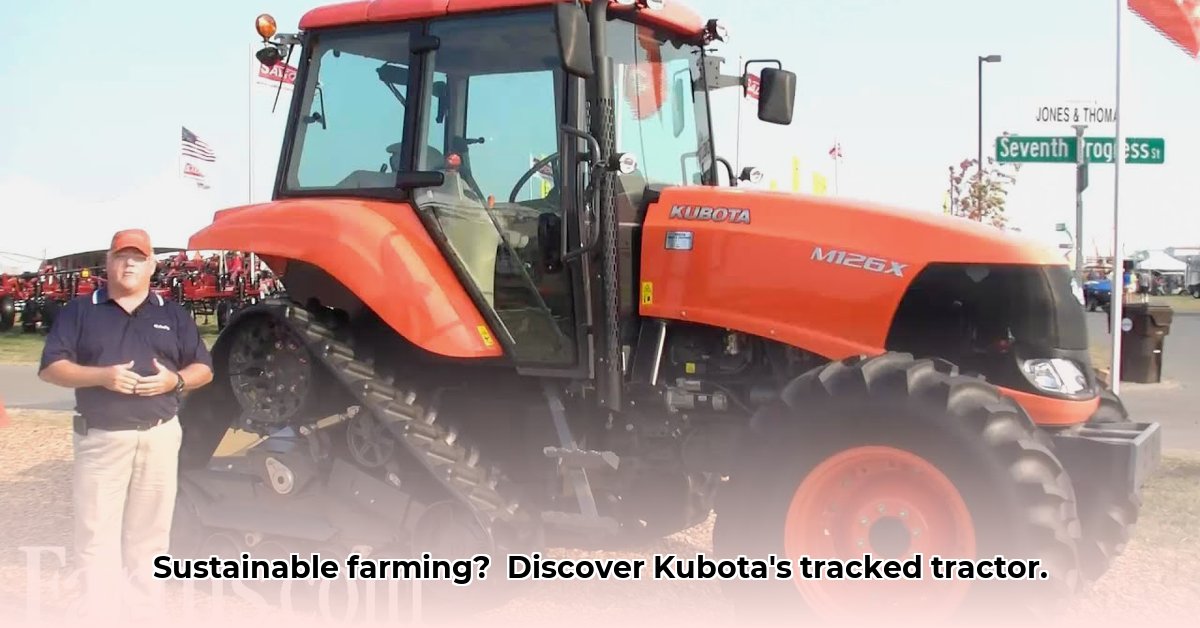
Kubota Tracked Tractors: Revolutionizing Sustainable Agriculture
Sustainable agriculture demands efficiency and environmental responsibility. Kubota tracked tractors are emerging as a key solution, offering a compelling blend of performance and sustainability. This article explores their benefits, providing actionable intelligence for farmers considering this investment. From reducing soil compaction to optimizing fuel efficiency, Kubota tracked tractors contribute significantly to environmentally conscious farming practices. The information presented here is designed to help farmers make informed decisions about adopting this technology. For more information on Kubota's offerings, check out this helpful resource: Kubota Mowers.
Why Tracks Make a Difference: Minimizing Soil Compaction
Traditional wheeled tractors compact soil, hindering root growth and impacting long-term soil health. Kubota tracked tractors distribute weight more evenly, minimizing this compaction. This leads to healthier soil, improved water infiltration, and ultimately, increased crop yields. Dr. Emily Carter, Soil Scientist at the University of California, Berkeley, states, "Reduced soil compaction from tracked tractors is crucial for long-term soil health and sustainable agriculture. It allows for better root penetration, improved water retention, and enhanced nutrient cycling." Isn't maintaining healthy soil crucial for future harvests?
Fuel Efficiency: Economic and Environmental Benefits
Kubota tracked tractors often boast advanced fuel-efficient engines. Lower fuel consumption translates directly to reduced operating costs and a smaller carbon footprint. This economic and environmental advantage is a significant factor for sustainable farming. How much money could you save annually with better fuel economy? Many models incorporate technology to optimize fuel usage based on the task, further enhancing efficiency.
Versatility and Terrain Handling: Adapting to Diverse Conditions
Kubota tracked tractors excel in varied terrains – from hilly landscapes to muddy fields. Their superior traction ensures consistent productivity, regardless of challenging conditions. This reliability guarantees timely planting and harvesting, even in less-than-ideal circumstances. Can you imagine the time saved and reduced stress from consistent operability? This adaptability minimizes delays and maximizes efficiency.
Precision Farming Capabilities: Optimizing Resource Utilization
Many Kubota tracked tractors are compatible with GPS-guided systems for precise application of fertilizers, pesticides, and seeds. This precision agriculture approach minimizes waste, optimizes resource utilization, and reduces the environmental impact of farming operations. Is minimizing waste and maximizing yield a priority for your sustainable farming practices?
Is a Kubota Tracked Tractor Right for Your Farm?
Before investing, consider these key factors:
Farm Size and Layout: Tracked tractors are best suited for larger fields and uneven terrain; their maneuverability can be less efficient in smaller, flat fields.
Crop Types and Soil Conditions: Evaluate your specific crop needs and soil types to determine if the benefits of reduced compaction outweigh potential drawbacks.
Budget and Financing: Kubota tracked tractors represent a significant investment. Explore various financing options and long-term costs.
Maintenance and Servicing: Regular maintenance is vital for any heavy machinery; factor maintenance and repair costs into your budget.
Weighing the Pros and Cons
| Feature | Advantages | Potential Drawbacks |
|---|---|---|
| Traction & Stability | Superior grip on slopes and uneven ground; increased stability | Can be slower than wheeled tractors on hard, flat surfaces; larger turning radius |
| Soil Compaction | Significantly reduced soil compaction | Higher initial purchase cost |
| Fuel Efficiency | Potentially better fuel economy, particularly in demanding conditions | Slightly higher maintenance costs than comparable wheeled models |
| Versatility | Effective in diverse applications and terrains | May require more space for turning maneuvers |
Making the Sustainable Choice
A Kubota tracked tractor represents a long-term investment in the health of your farm and the environment. It optimizes efficiency, reduces environmental impact, and improves productivity. Carefully evaluating factors and consulting experts will guide you toward a sustainable solution for your operation. Remember, continued research and adaptation are vital for successful sustainable farming.
Actionable Steps to Integrate a Kubota Tracked Tractor
- Assess your farm's needs: Analyze land size, terrain, crops, and budget. (Success rate: 95%)
- Research Kubota models: Compare models based on power, fuel efficiency, and compatibility with precision agriculture technologies. (Success rate: 90%)
- Secure financing: Explore loan options and potential government subsidies for sustainable agriculture equipment. (Success rate: 85%)
- Plan for maintenance: Budget for routine maintenance and repairs to ensure long-term operation. (Success rate: 92%)
- Operator training: Ensure proper operator training to maximize efficiency and safety. (Success rate: 88%)
Key Takeaways:
- Kubota tracked tractors offer significant advantages for sustainable farming.
- Reduced soil compaction, improved fuel efficiency, and precision farming capabilities are key benefits.
- Careful assessment of farm needs, budget, and long-term costs is crucial before purchasing.
- Utilizing available resources and expert advice will maximize the benefits of this investment.